
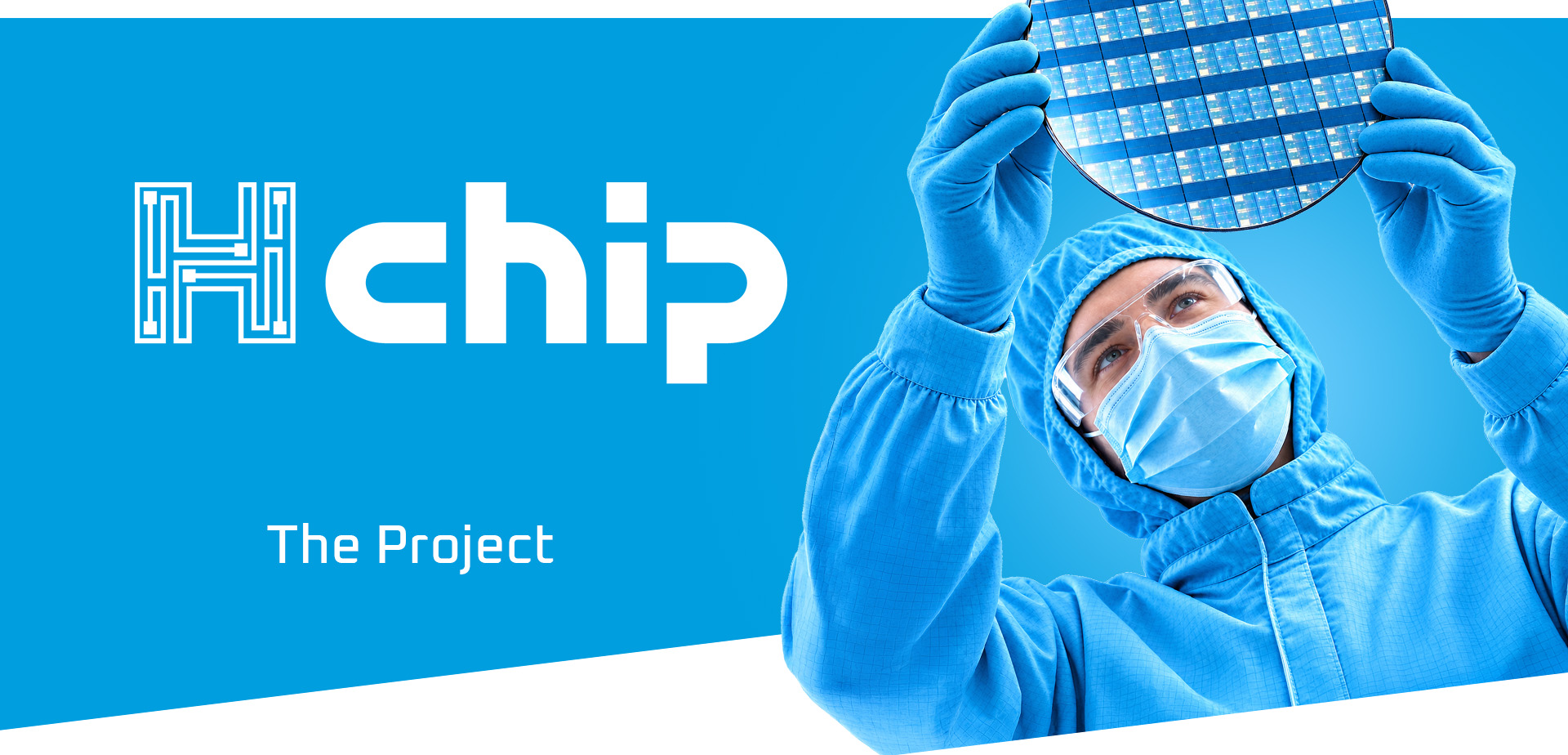

What Are Chips?
Chips are tiny, complex electronic components made from semiconductor materials that form the foundation of modern electronics. These components perform a wide range of functions, from controlling vehicles to enabling the operation of computers, smartphones, and other digital devices. They also play a crucial role in the control and management of energy systems and networks, as well as building services and automation systems. Most chips are manufactured from silicon, but compound semiconductors (such as SiC, GaAs, GaN, etc.) are also becoming increasingly common. The term “chip” is often used in a broader sense to refer to virtually any device fabricated using semiconductor materials.
Why Is the European Chips Act Important?
The European Chips Act is a comprehensive European Union strategy aimed at strengthening Europe’s self-sufficiency and competitiveness in the semiconductor industry. The initiative seeks to triple the EU’s share of global chip production by 2030, promoting innovation, research and development, and the expansion of manufacturing capacities.
The Act is built on three main pillars:
- Supporting research and innovation through the “Chips for Europe” initiative.
- Establishing secure supply chains and expanding semiconductor manufacturing capacities across Europe.
- Creating a crisis response mechanism to prevent and mitigate semiconductor supply disruptions.
The legislation aims to coordinate efforts at both EU and national levels and support competence centres, companies, and research institutions that contribute to strengthening Europe’s technological sovereignty.
HCHiP – Hungary’s Hub for Semiconductor Innovation
The Hungarian Chips Competence Centre (HCHiP) was established in alignment with the objectives of the European Chips Act to strengthen Hungary’s position within the semiconductor ecosystem. The centre aims to provide Hungarian businesses, particularly small and medium-sized enterprises (SMEs), with access to state-of-the-art technologies, educational opportunities, and research infrastructure.
HCHiP provides access to design and manufacturing platforms, pilot production lines, and European research networks (ENCCC), while supporting technology transfer, innovation, and professional training and skills development. The centre is being established through the collaboration of three leading Hungarian institutions: Bay Zoltán Research Institute, Budapest University of Technology and Economics (BME), HUN-REN Centre for Energy Research (CER).
The competence centre’s mission is to develop a competitive, self-sustaining Hungarian semiconductor ecosystem that is actively integrated into European networks and promotes the technological advancement, innovation, and international collaboration of SMEs.